
The Future of Auto Safety is Analytical
Subtle Biometric Observation
Persistent Safety Assessment
Fluid Hardware Integration
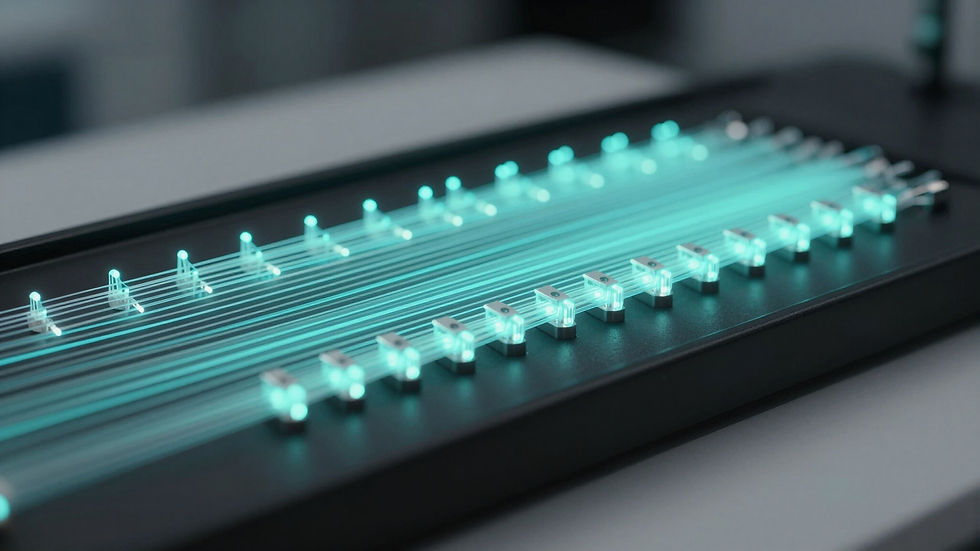
Redefining automotive security, Z-Optix delivers elegant, non-intrusive optical analysis built for the vehicles of tomorrow. Our specialized sensors track cabin metrics instantly without disturbing the drive.
Advantage of Z-Optix Technology
Technical Challenge
Legacy Failure Mode
The Z-Optix Advantage
Chemical Cross-Interference (Aldehydes)
Basic electrical or infrared devices fail because they mistake blood ethanol for its main metabolic byproduct, acetaldehyde.
This is our primary patent-protected physics lead. Z-Optix has the world's only ability to separate real ethanol from aldehydes in biological mass. Our pulse-linked Raman technology targets the exact 880 cm⁻¹ vibrational signal unique to ethanol, fully isolating it from the 916 cm⁻¹ markers seen in lactic acid or aldehydes.
In-Cabin Multi-Modal Data Fusion
Standalone cabin cameras or isolated surface sensors lack biological context, creating blind spots or delayed impairment responses.
Our software architecture is built for native API integration with standard in-cabin IR/NIR occupant monitoring cameras. By pairing our direct vascular touch-biometrics with active computer vision, the platform AI executes real-time sensor fusion. This allows the system to cross-reference physiological biomarkers with visual metrics to accurately identify abnormal stress states or micro-sleep patterns.
Critical Operator Health Emergencies
Vehicles continue moving unchecked if a driver loses consciousness or suffers a sudden, catastrophic medical event at the wheel.
Autonomous Life-Saving Triggers: If the steering wheel sensor detects a sudden loss of the driver’s cardiac pulse, the system automatically engages an immediate emergency response protocol. The vehicle will safely navigate to a stop, initiate a call to emergency services (911), and securely stream a live data feed from the cabin's IR/NIR camera to dispatchers for rapid visual evaluation and asset deployment.
Economic Growth and Risk Reduction
Global Footprint
High Market Scalability
As industry data reveals, Z-Optix is strategically positioned to disrupt this significant protective sector. Utilizing our unique patents, we provide car manufacturers with a flexible platform to satisfy upcoming safety requirements.
Production Hurdles
Solving Engineering Obstacles
Standard safety equipment usually requires manual input from travelers. Z-Optix bypasses this limitation with an inherent, automated system for ethanol tracking, facilitating rapid deployment in mass manufacturing cycles.

Statutory Compliance
Targeted Vehicle Programs
Authorities globally are mandating non-contact safety protocols. Z-Optix satisfies this urgent requirement by providing the laboratory-grade precision needed for legal mandates without altering car interiors or driver habits.
Path to Launch
Strategic Growth and Milestones
We have recently solidifed a major agreement with a top-tier automotive supplier to embed our signature sensor array into their upcoming interiors. Primary prototype units will debut at the next CES event.
Market Superiority
Z-Optix resolves the key technical barriers that make existing vapor sensors unfeasible for cars.
Alternative
Methodology
Technical Deficiency
Maturity
Incumbent Providers
SWIR Spectral Imaging
Humidity interference from moisture makes reliable readings unattainable in real cabins
Still in lab trials with no roadmap for use
MOX Vapor Systems
Airborne atom sensing
Unable to isolate individual breath from ambient air; prone to external noise
Does not achieve forensic-grade accuracy
Conductivity Sensors
Basic skin contact
Zero correlation to actual intoxication; high noise
Excluded from automotive production
How is the Z-Optix platform capable of isolating ethanol from other biological metabolites?
Our software framework is designed for seamless data exchange with existing cabin monitoring hardware. By combining our specialized touch-point biometrics with neural network vision, the platform performs instantaneous data merging. This enables the vehicle to verify pulse data against visual behavioral cues to detect fatigue, medical distress, or trigger emergency protocols if a total pulse failure is identified. Life-Safety Automation: If the steering interface detects a cessation of the driver's heart rate, the vehicle initiates a priority rescue procedure. It will autonomously transition to a safe stop, notify emergency dispatchers, and transmit a live encrypted video stream from the interior to first responders to ensure immediate medical intervention and situational awareness.
How is sensor fusion specifically implemented within the vehicle's onboard processing?
This represents our central scientific advantage. Conventional infrared sensors often struggle because they confuse ethanol with other chemical markers like acetaldehyde. Z-Optix possesses the unique capability to differentiate pure ethanol from other organic compounds in real-time. Our Raman-based system identifies the specific 880 cm⁻¹ frequency associated with ethanol, completely filtering it from the 916 cm⁻¹ signals found in other metabolic substances.

Our Leadership
Dr. Vlad Burtman — Co-Founder and Physics Designer
Dr. Mohsen Sharifzadeh — Hardware Engineering Head
Focus Area: Electronic Transport and Nano-Materials
A renowned scholar in molecular physics from the University of Utah, Dr. Burtman developed the Z-Optix detection core. His deep understanding of electronic signatures enables our hardware to analyze human tissue with immense accuracy, establishing the vital framework for chemical monitoring at the point of contact.
Focus Area: Optical Stacks and Machine Vision
As a prominent architect of light-based sensors, Mohsen has launched numerous complex biometrics into global markets. Previously, he designed high-end medical imaging tools, perfecting non-contact human analysis. At Z-Optix, he manages the production of our photonic hardware to translate theoretical physics into durable, car-ready systems.
Dr. George Medvedev, MD - Chief Medical Officer (CMO)
Dr. Medvedev is a distinguished neurologist with over two decades of clinical experience in acute neurology, neuro-trauma, and stroke management. Currently, he heads the Division of Neurology at Fraser Health Authority, where he directs neurological services for Royal Columbian Hospital’s regional trauma center alongside Burnaby General and Eagle Ridge Hospitals. Beyond his administrative and clinical roles, he serves as a Clinical Assistant Professor at the University of British Columbia, mentoring the next generation of medical specialists. As a member of the Canadian Society of Medical Evaluators, Dr. Medvedev provides Z-Optix with elite clinical validation and medico-legal perspective. His expertise is instrumental in developing the medical secondary logic for our real-time stress monitoring and the automated emergency protocols designed to save lives during critical health events behind the wheel.
Focus Area: A senior physician leading the medical strategy of a technology corporation.
Our alliance merges deep expertise in quantum mechanics, spectral analysis, and neural networks to drive the entire development path, from foundational patents to commercial-grade hardware for the global vehicle production industry.
Connect With Our Tech or Sales Departments
We invite inquiries from automotive researchers, strategic partners, and venture funds interested in the Z-Optix ecosystem. Contact us to arrange a private technical review, view our patent documentation in the legal repository, or consult with our founders. Direct inquiries: vlad.burtman@gmail.com | Location: Utah, USA